
Guest-facing fixtures
Toilets, urinals, sinks, faucets, counters, mirrors, and partitions are cleaned according to the agreed checklist.
Serving Providence, Rhode Island & surrounding areas
Keep guest and employee restrooms clean, stocked, and ready for service with a recurring plan built around your operating hours.
Built around restaurant operations
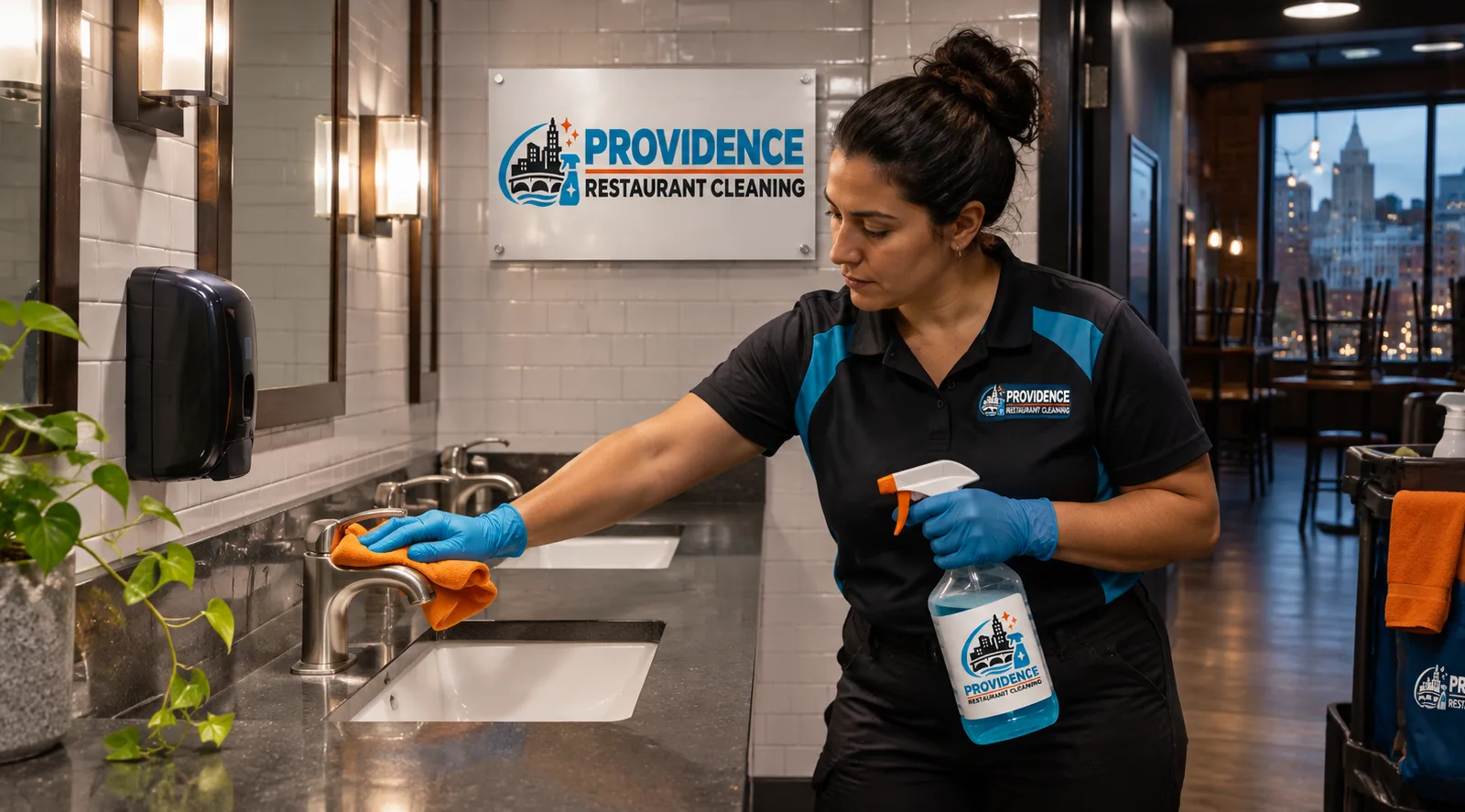
Restaurant Restroom Cleaning needs to address what guests notice immediately: odors, visible soil, empty dispensers, water spots, overflowing waste, and neglected touchpoints. Providence Restaurant Cleaning provides scheduled restroom care for dining rooms, bars, cafés, and other food-service operations. The work can be completed after closing, before opening, or during another agreed service window.
Our restaurant specialists serving Providence build the work around restroom layout, customer volume, operating schedule, and the condition expected at opening. A written scope can identify fixtures, floors, partitions, mirrors, dispensers, waste receptacles, and high-touch surfaces so the crew and restaurant manager share a clear standard.
The location at 114 Point St is close to restaurant activity around the Jewelry District and Downtown, where late closing times and compact commercial spaces can affect access. Federal Hill dining rooms may need cleaning scheduled around dinner and weekend traffic, while College Hill restaurants can experience sharp changes in customer volume during the academic calendar. These details belong in the service plan rather than being handled as last-minute exceptions.
A standard visit can include cleaning and disinfecting toilets, urinals, sinks, faucet handles, counters, dispensers, door handles, grab bars, partition latches, and other frequently touched surfaces. Mirrors are cleaned without streaks, waste is removed, liners are replaced, and floors are swept or vacuumed before damp mopping. The crew can also check supplies and restock customer-provided soap, toilet tissue, paper towels, and sanitary disposal liners when that responsibility is included in the scope.
Cleaning and disinfection are separate steps. Visible soil should be removed before an appropriate disinfectant is applied. The product label determines the required contact time, surface compatibility, dilution, and safety precautions. Applying a product and wiping it away immediately may not meet its labeled disinfection instructions.
Restroom floors need particular attention around toilets, urinals, sinks, corners, and wall edges. A clean mop, suitable floor product, and controlled water use help prevent residue and slippery conditions. Supplies and tools assigned to restrooms should be kept separate from those used in dining or food-preparation areas to limit cross-contamination.
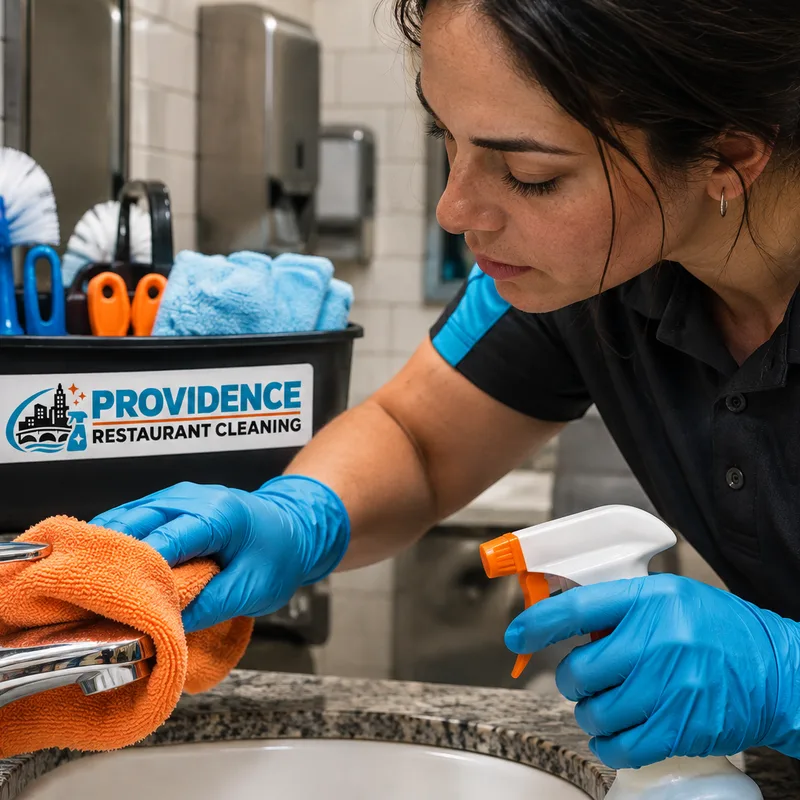
Toilets, urinals, sinks, faucets, counters, mirrors, and partitions are cleaned according to the agreed checklist.
Door hardware, flush controls, dispenser levers, grab bars, and partition latches receive focused attention with compatible products.
Crews remove waste, replace liners, collect loose debris, and damp mop floors with attention to edges and fixture bases.
Soap, tissue, towels, and sanitary disposal supplies can be checked and replenished from restaurant inventory when included.
The work targets soil, waste, spills, drains, and hard-to-reach fixture areas rather than relying on fragrance to cover odors.
Managers can identify recurring concerns, access instructions, alarm procedures, and special attention areas for the service record.
We review fixture counts, floor materials, dispensers, current condition, storage, access, and the restaurant's opening and closing schedule.
The service plan states what is cleaned, what is disinfected, who supplies consumables, and whether visits occur daily or on selected nights.
Restaurant Night Cleaning may require key, alarm, loading, or parking instructions. These details are agreed before the first overnight visit.
The assigned crew follows the restroom sequence, handles waste and restocking, and records conditions that need a manager's attention.
The scope can be updated when hours, customer volume, restroom use, or supply responsibilities change.
Overnight service allows restroom work to proceed without disrupting guests or competing with active service. The best start time depends on the actual closeout routine. Staff may still be counting drawers, receiving late deliveries, or finishing front-of-house duties after the posted closing time, so access should be based on when the space is released to the cleaning crew.
Downtown properties may have limited curb access, shared entrances, or building-specific security procedures. On Federal Hill, evening dining traffic can affect arrival timing. Fox Point restaurants may need plans that account for mixed residential and commercial surroundings, particularly when waste and equipment must be handled quietly after closing. A workable restaurant janitorial plan records these constraints in advance.
For locations that need service every operating day, recurring restaurant cleaning also provides continuity. The crew follows the same core scope, while managers have a direct way to report a dispenser problem, unusual spill, plumbing concern, or supply shortage. Cleaning personnel can report visible maintenance issues, but plumbing repairs, mold remediation, and pest control require the appropriate specialist.
A dependable proposal should be specific enough to compare. It should identify service frequency, restroom count, fixtures, floor care, touchpoint disinfection, waste removal, restocking responsibility, service window, supply ownership, access procedure, and reporting expectations. If periodic detail work is needed, that frequency should be written separately from routine nightly tasks.
Product selection should match the surface. Acidic bowl cleaners, general restroom cleaners, glass cleaners, and disinfectants have different purposes and should not be treated as interchangeable. Natural stone, specialty metals, painted partitions, and some plastics may require product restrictions. Safety Data Sheets and manufacturer labels provide handling and compatibility information.
Daily Restaurant Cleaning is often priced as a recurring scope rather than a single isolated task. The amount of labor changes with restroom size, fixture count, soil level, customer traffic, floor condition, consumable handling, access difficulty, and the number of weekly visits. A walkthrough gives the restaurant janitorial company enough information to prepare a written price and prevent unclear assumptions.
Arrange a restroom walkthrough to establish the cleaning frequency, overnight access plan, supply responsibilities, and opening-ready standard your operation needs.
Call for a Free QuoteRecurring restroom cleaning is quoted after reviewing the number of restrooms and fixtures, visit frequency, current condition, service window, and restocking duties. A small single-restroom operation has a different labor requirement than a busy venue with several guest and employee facilities. Providence access conditions, including shared Downtown entrances or restricted arrival times, can also affect the scope. The exact price is confirmed in a written proposal after a walkthrough.
Yes, overnight restaurant cleaning can be scheduled for an agreed window after the restaurant has finished its closeout routine. The plan should cover keys or codes, alarm instructions, approved entrances, parking or loading limitations, and the person to contact about access problems. A Downtown restaurant with a shared building entrance may require different arrangements than a standalone location.
The right frequency depends on operating days, customer volume, restroom count, hours, and the standard management wants at opening. Some operations need nightly service, while others use selected recurring nights plus in-house checks during service. Federal Hill weekend dining traffic and College Hill calendar changes can justify reviewing frequency when use patterns shift.
Restocking can be included when the restaurant provides the consumables and assigns accessible storage. The written scope should identify each dispenser, the approved products, minimum stock levels, and who orders replacements. This prevents an empty dispenser from being mistaken for a cleaning failure when inventory has run out.
Routine service can include scheduled detail tasks, but the frequency and exact work should be stated separately. Detail work may address partition edges, fixture bases, grout lines, wall splash areas, vents, and buildup around hard-to-reach surfaces. Restoration, plumbing repair, pest treatment, and mold remediation fall outside ordinary janitorial cleaning and should be assigned to qualified specialists.
Yes, restroom tools, chemicals, and workflow can be kept separate from dining and food-preparation areas. Color-coded equipment and dedicated restroom supplies help control cross-contamination. Product storage, transport routes, and disposal procedures should be agreed during the Providence walkthrough, especially in compact commercial spaces.
The crew can document and report a visible issue according to the agreed communication process. Cleaning staff should not perform repairs outside their assigned scope. A leaking toilet, backed-up drain, loose grab bar, or failed dispenser should be referred promptly to restaurant management and the appropriate repair professional.
Plan recurring restroom care
Tell Providence Restaurant Cleaning about your hours, restroom count, current concerns, and preferred service frequency. We will help define a recurring or overnight scope that fits the way your restaurant operates.