
Cooking-Line Grease
Degreaser is matched to the floor and allowed controlled dwell time near fryers, ranges, and other high-deposit areas. Agitation breaks up the bonded film before it is recovered.
Serving Providence, Rhode Island & surrounding areas
Remove built-up grease and restore tile and grout. Keep your restaurant floor ready for demanding daily service with dependable professional cleaning.
Built for active food-service spaces
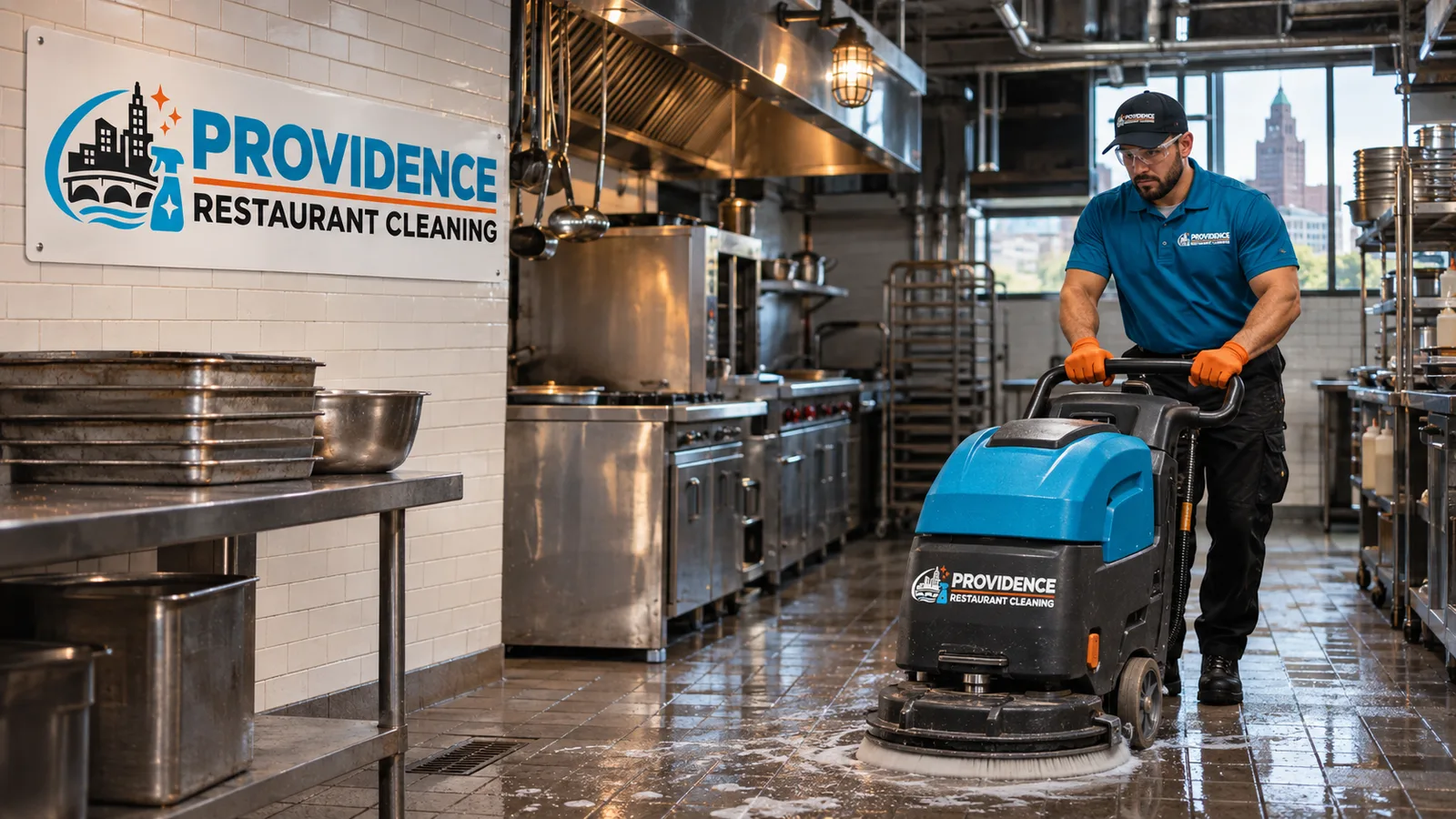
Commercial Kitchen Floor Cleaning targets the grease, food residue, tracked-in soil, and dirty grout that routine mopping can leave behind. Providence Restaurant Cleaning uses a planned process based on the flooring material, soil load, kitchen layout, and hours of operation. The goal is a floor that looks properly maintained and is easier for staff to keep clean between professional visits.
Hot lines, fry stations, warewashing areas, coolers, and delivery routes create different cleaning demands. Grease near cooking equipment may require an alkaline degreaser and controlled dwell time, while grout lines need focused agitation to release embedded soil. Corners, edges, floor-to-wall transitions, and the spaces around fixed equipment also need attention. A quick mop across the open floor cannot address those areas effectively.
We build each project around active food-service spaces and never treat a kitchen like an ordinary commercial floor. We discuss access, sensitive equipment, floor drains, cleaning chemistry, and the time required for the floor to dry before employees return.
A commercial kitchen floor may be quarry tile, ceramic tile, porcelain tile, sealed concrete, or another resilient material. Each surface has limits. The wrong chemical concentration, pad, brush, or water volume can leave residue, damage a finish, or push contaminated water into areas that should remain dry.
Restaurant tile cleaning usually begins with dry soil removal, followed by application of a compatible cleaning solution. After the proper dwell time, mechanical agitation loosens bonded grease and soil. Detail brushes reach grout joints, edges, and tight spaces. The suspended residue is then recovered rather than spread across the floor, and the surface is rinsed as needed to reduce detergent film.
The cleaning plan also accounts for floor drains and kitchen equipment. Wastewater must be controlled, and spray should not be directed into electrical components, food-storage areas, or open equipment. Providence's older urban building stock can include compact kitchens with narrow access and several floor transitions, so equipment selection and hose routing matter as much as cleaning power.
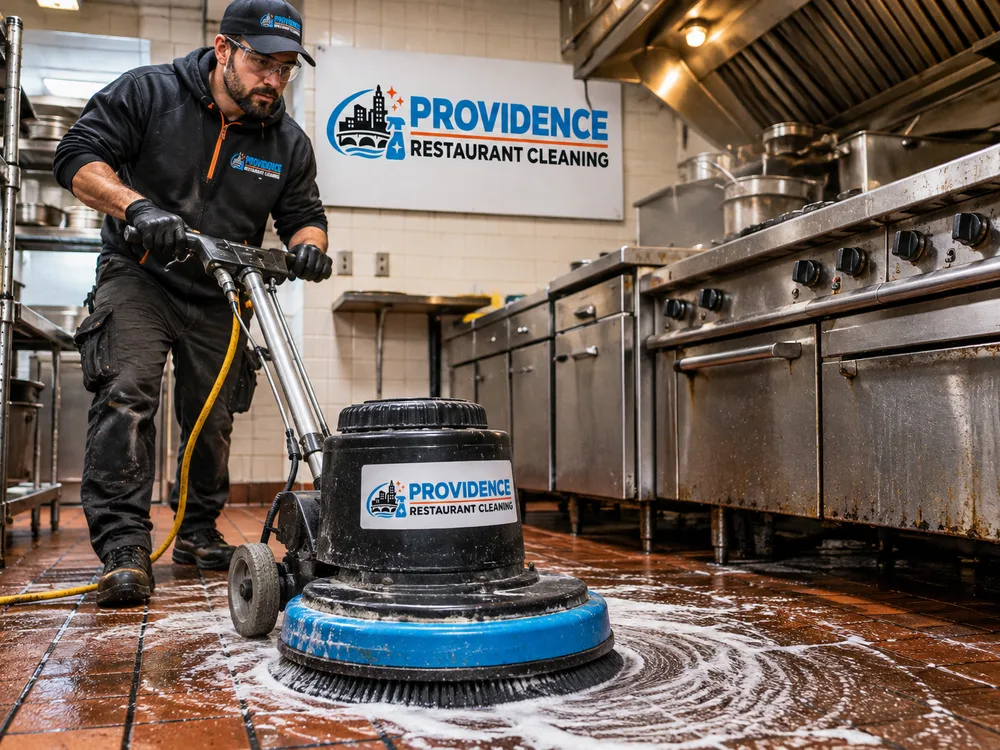
Degreaser is matched to the floor and allowed controlled dwell time near fryers, ranges, and other high-deposit areas. Agitation breaks up the bonded film before it is recovered.
Textured and slip-resistant tile traps soil in low points. Suitable brushes or pads clean the surface profile without relying on excessive chemical strength.
Grout joints receive focused agitation to lift embedded residue. Existing discoloration, damaged joints, and failed grout may remain visible after soil is removed.
Hand tools address corners, thresholds, kick plates, floor-to-wall transitions, and accessible spaces around fixed equipment that larger machines cannot reach.
Dirty solution is extracted or otherwise recovered in a controlled manner. Rinsing is adjusted to the cleaner and floor so sticky detergent residue is not left behind.
Service frequency can be set around cooking volume, menu, traffic, and in-house mopping. Recurring restaurant floor cleaning keeps heavy accumulation from becoming the normal condition.
We identify the flooring material, heavy grease zones, grout condition, drains, transitions, fixed equipment, and access constraints. The inspection also flags damaged tile, missing grout, failed coatings, or other conditions that cleaning cannot repair.
The work is scheduled around service, deliveries, and staff activity. Movable items are addressed as agreed, while food, utensils, and sensitive equipment must be protected or removed from the active cleaning area.
A compatible solution is applied at the selected dilution. The cleaner receives enough dwell time to loosen residue, but it is not allowed to dry on the floor.
Commercial equipment cleans open areas while detail tools work grout lines, corners, thresholds, and accessible spaces around equipment. Heavier deposits may require repeated treatment.
The loosened grease and dirty solution are collected in a controlled way. The floor is rinsed when needed, then checked for remaining deposits and detergent film.
We review the cleaned area, note pre-existing damage, and discuss practical maintenance between visits. Staff should keep traffic off the floor until it reaches a suitable dry condition.
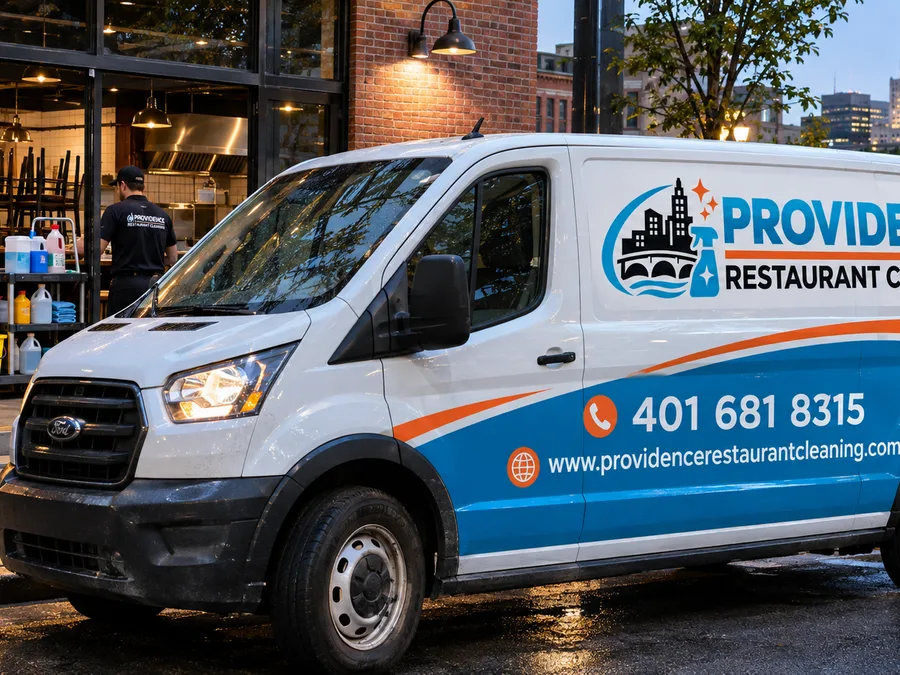
Restaurant Floor Cleaning in Providence has to fit the realities of dense commercial districts. Downtown kitchens may have limited loading access and narrow service corridors. Federal Hill restaurants often operate in older mixed-use buildings where compact back-of-house layouts affect equipment movement. In the Jewelry District, also known as the Innovation District, larger converted buildings may have long travel routes between an entrance and the kitchen. Along South Water Street, evening service and event traffic can make timing and access especially important.
Rhode Island winters also bring road salt, grit, and moisture through delivery entrances and employee routes. That tracked-in material mixes with kitchen grease and can settle into textured tile and grout. Entry mats, frequent dry soil removal, and prompt mopping help control it, while periodic deep cleaning removes the film that daily work leaves behind.
We plan Commercial Floor Cleaning Providence restaurants can schedule during a closed period or another agreed service window. The correct frequency depends on cooking methods, production volume, floor texture, ventilation performance, and the quality of daily maintenance. A high-output fry line usually needs more frequent restaurant floor degreasing than a low-grease prep area.
Professional cleaning removes removable soil. It does not repair cracked tile, replace missing grout, correct an improperly pitched floor, restore a failed coating, or eliminate permanent staining. Grease can also penetrate porous or unsealed grout over time, so a cleaned joint may not return to its original color. We identify these limitations during the inspection and avoid promising a cosmetic result that the floor condition cannot support.
Slip resistance also depends on more than appearance. Floor texture, footwear, active spills, grease aerosols, rinse residue, and maintenance practices all affect traction. A clean floor still needs prompt spill response and appropriate wet-floor controls. Mats should be cleaned and allowed to dry rather than placed back while saturated with grease or detergent.
Good daily care extends the result. Sweep or vacuum loose debris before wet cleaning, use the correct chemical dilution, change dirty mop water, and clean the mop head after use. Overusing detergent can leave a tacky film that attracts soil. Mixing chemicals is unsafe, and acidic products should not be combined with chlorine-based cleaners. Product labels and safety data sheets should guide storage, dilution, personal protective equipment, and use.
Commercial kitchen floor cleaning in Providence typically costs about $250 to $750 per visit for a small to mid-sized kitchen, while large kitchens, severe grease buildup, or extensive grout detailing may run $750 to $1,500 or more. These are general planning ranges, not a fixed quote.
Final pricing depends on floor area, surface type, soil level, equipment access, movable fixtures, service timing, wastewater recovery, and whether repeated degreasing is required. Recurring service may be priced differently from a one-time restoration clean. The exact cost is confirmed after the floor and work conditions are assessed.
A written scope can define the cleaning areas, grease and grout priorities, service window, preparation duties, and recurring schedule before work begins.
Call for a Free QuoteThe right interval depends on grease output, traffic, floor texture, and the strength of daily cleaning. A busy fryer line may need professional degreasing weekly or biweekly, while a lower-volume prep kitchen may schedule monthly or quarterly work. Winter salt and grit entering through Providence delivery routes can justify shorter intervals in affected areas.
Yes, service can be arranged during an agreed closed period when the kitchen is clear and the floor can remain out of use while it dries. The schedule should account for late cleanup, early deliveries, alarm or building access, and the time required to move approved items. Dense Downtown and Federal Hill locations may also require planning for loading access.
Movable floor items should be cleared according to the written scope, but heavy or connected equipment is not moved unless specifically assessed and agreed upon. Gas, plumbing, electrical, and ventilation connections create hazards. Cleaning normally covers open floor and safely accessible edges around fixed equipment.
No, cleaning removes soil but cannot reverse permanent discoloration, chemical damage, missing grout, or grease that has penetrated a porous joint. Test cleaning can help distinguish removable buildup from staining. Failed or damaged grout needs repair by a qualified trade after the area is cleaned and dry.
Food, utensils, packaging, and small movable items should be removed or protected before work starts. Staff should finish active production, identify sensitive equipment, and provide agreed access to water, drains, and the work area. Providence kitchens with narrow corridors should keep the planned equipment route clear.
The floor should stay out of service until excess water is recovered and the surface has reached a suitable dry condition. Drying time varies with floor texture, room temperature, ventilation, humidity, and how much detail work was required. Wet-floor controls should remain in place during that period.
Yes, different surfaces can be cleaned during one visit when each receives compatible chemistry, tools, and procedures. Quarry tile and grout often need detailed agitation, while sealed concrete must be evaluated for coating condition and chemical sensitivity. A pre-service inspection identifies transitions and any damaged finish.
Plan the work clearly
Tell Providence Restaurant Cleaning about your flooring, grease buildup, kitchen schedule, and problem areas. We will help define a practical scope for one-time deep cleaning or recurring maintenance at 114 Point St, Suite 4 in Providence.