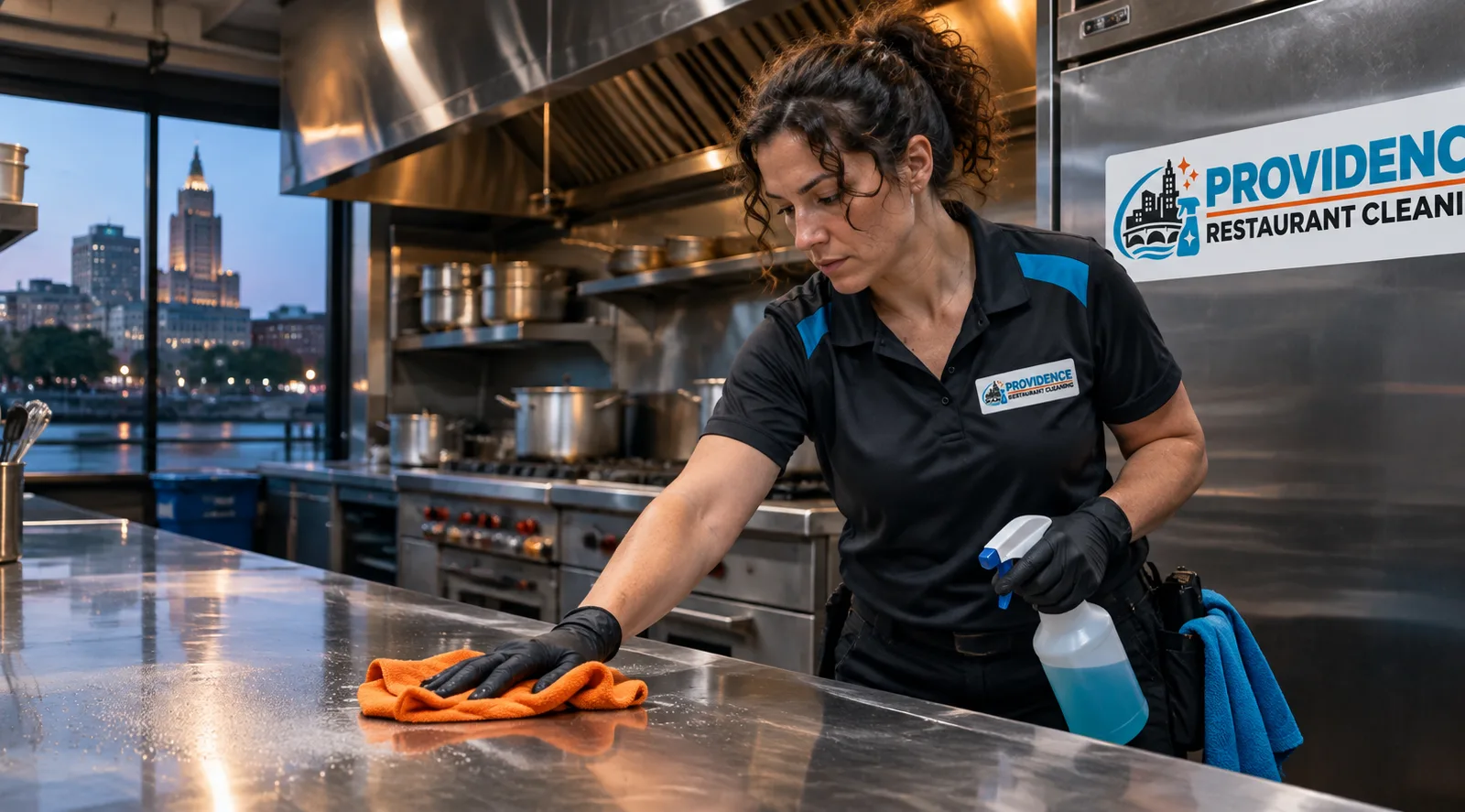
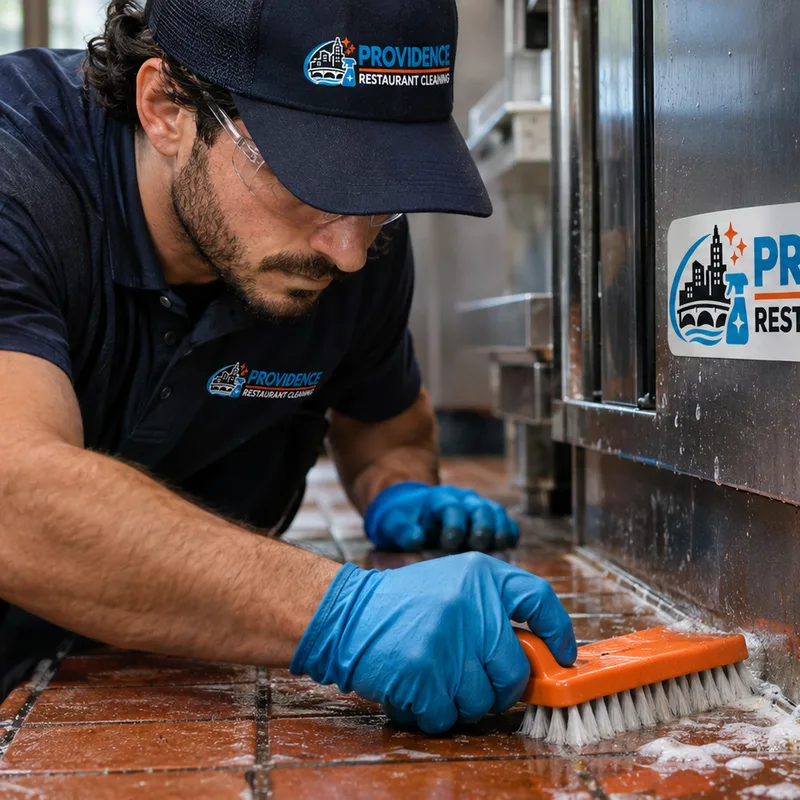
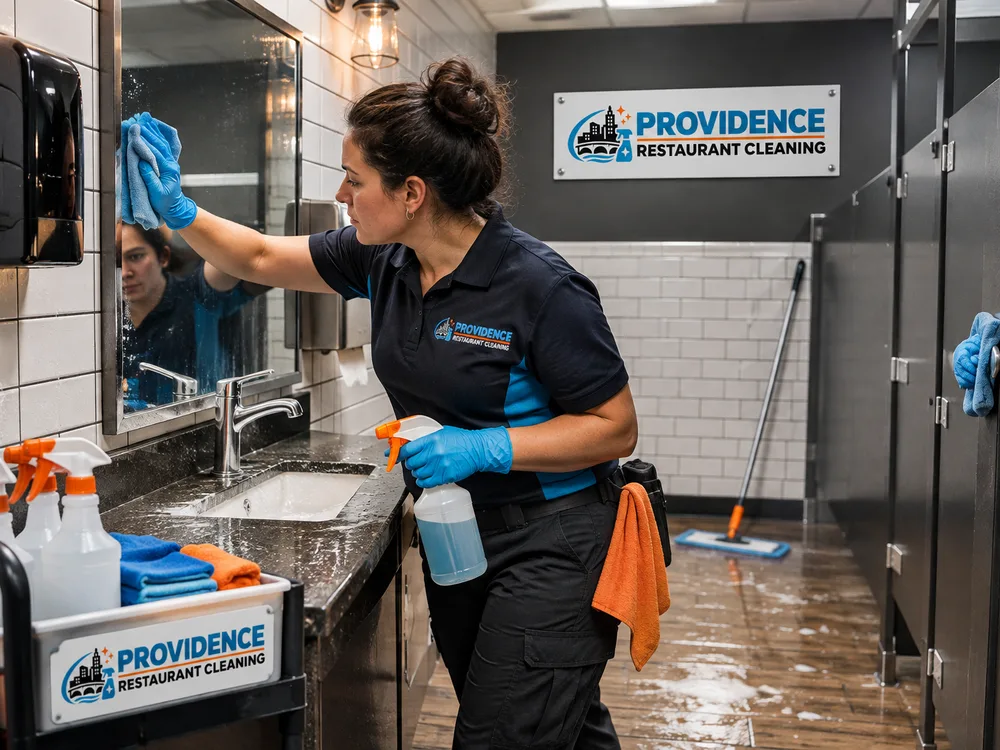
Restaurant kitchens produce a mix of grease, protein residue, crumbs, tracked soil, and moisture. Each needs the right treatment. Degreasers require adequate dwell time to loosen oily buildup, while disinfectants must remain visibly wet for the contact time stated on their labels. Products should also be compatible with the surface being cleaned.
Stainless steel, quarry tile, grout, rubber flooring, painted walls, and plastic laminates do not all tolerate the same chemistry or tools. Abrasive pads can scratch polished metal, overly strong chemicals can damage finishes, and excessive water can create slip risks or reach areas that should remain dry. Our team follows an agreed checklist and pays close attention to edges, equipment legs, casters, floor-wall junctions, and other places where residue collects.
Routine janitorial cleaning does not replace hood, duct, fire-suppression, pest-control, or equipment-maintenance work performed by qualified specialists. We define those boundaries before service begins so managers know what is included and can coordinate separate vendors when necessary.