
Back-of-House Detailing
Deep cleaning can address prep areas, dishwashing zones, storage rooms, washable walls, equipment exteriors and accessible spaces around movable units. The scope records what will be moved and what must remain in place.
Serving Providence, Rhode Island & surrounding areas
Detailed deep cleaning for commercial food-service spaces. Kitchens, walk-in coolers, dining areas and hard-to-reach surfaces are planned around your operating schedule.
Built for food-service facilities
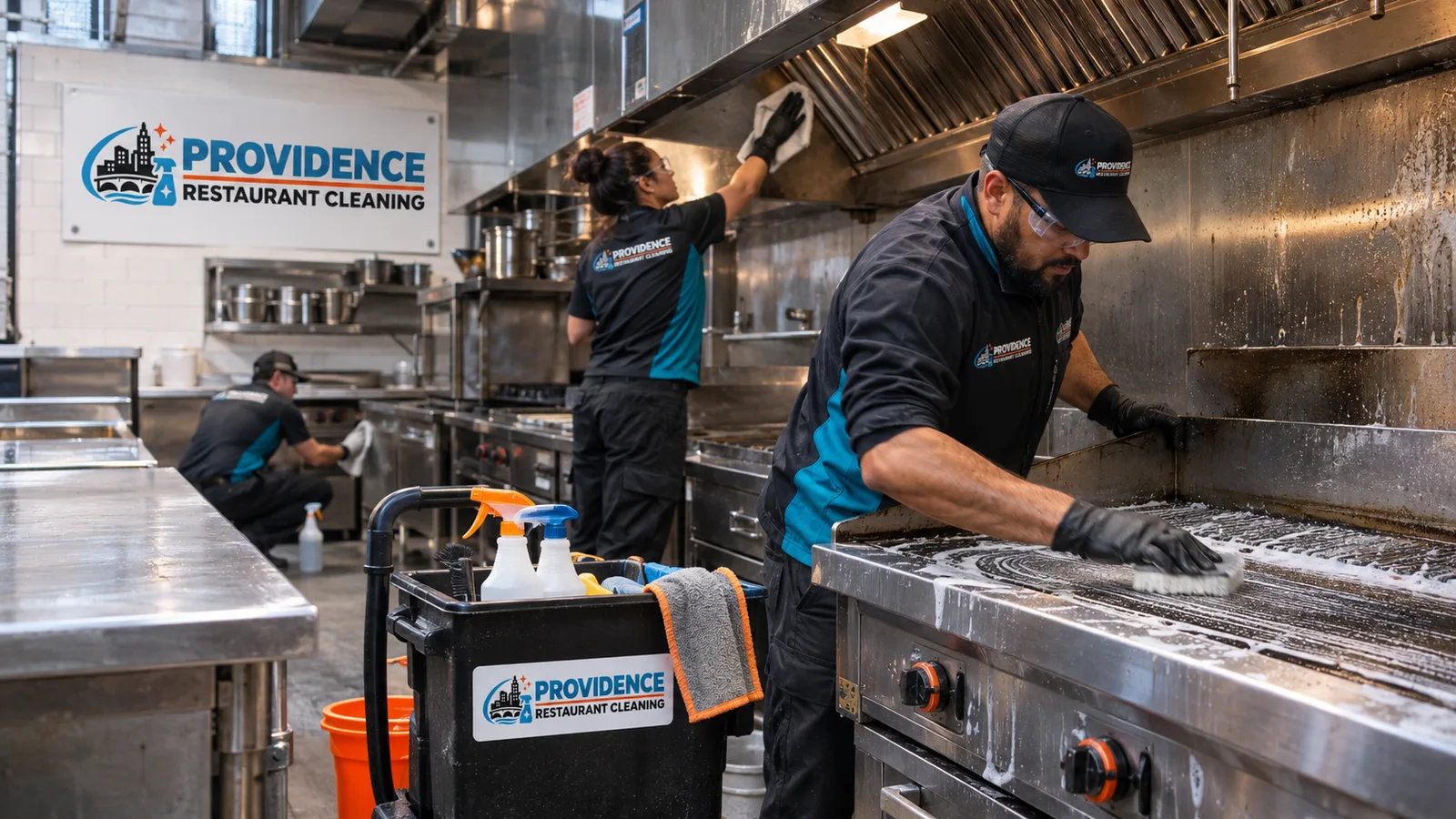
Providence Restaurant Cleaning handles the intensive work that routine opening and closing duties may not fully address. Our restaurant cleaning company develops a defined scope for kitchens, coolers, storage areas, dining rooms and other commercial spaces, with attention to soil level, equipment access and operational constraints.
We are restaurant specialists serving Providence, RI who plan work around the realities of food-service facilities rather than applying a generic office-cleaning checklist. A compact kitchen near Federal Hill may require careful staging because prep and storage space is limited. Downtown restaurants may need work coordinated around deliveries, building access and late closing times. Fox Point establishments often operate in older commercial buildings where narrow passages and hard-to-reach ledges require extra planning. The Jewelry District has a mix of converted and modern commercial spaces, so access and surface materials can vary within the same facility.
Before work begins, we identify the areas included, discuss sensitive equipment and confirm when surfaces must be ready for staff. You receive a practical plan based on the conditions in your restaurant.
Kitchen deep cleaning targets accumulated grease, carbon residue, food debris and soil in areas that are difficult to reach during a normal shift. Depending on the agreed scope, work may cover floors and edges, baseboards, walls, washable ceilings, stainless steel exteriors, shelving, prep surfaces, sinks, floor drains and accessible areas beneath or behind movable equipment.
Commercial kitchen deep cleaning in Providence should begin with a site review. The team must distinguish cleanable surfaces from electrical controls, pilot assemblies, sensitive seals and equipment that requires a licensed specialist for disassembly or service. Cleaning products also need adequate dwell time, followed by agitation and removal according to their labels. Food-contact surfaces require the correct rinse and sanitizing procedure before they return to use.
Heavy grease is handled in stages rather than spread across nearby surfaces. Dry debris is collected first, degreaser is applied where appropriate, and detailed agitation reaches corners, casters, legs and seams. Separate tools can be assigned to restrooms, kitchen areas and dining spaces to reduce cross-contamination.
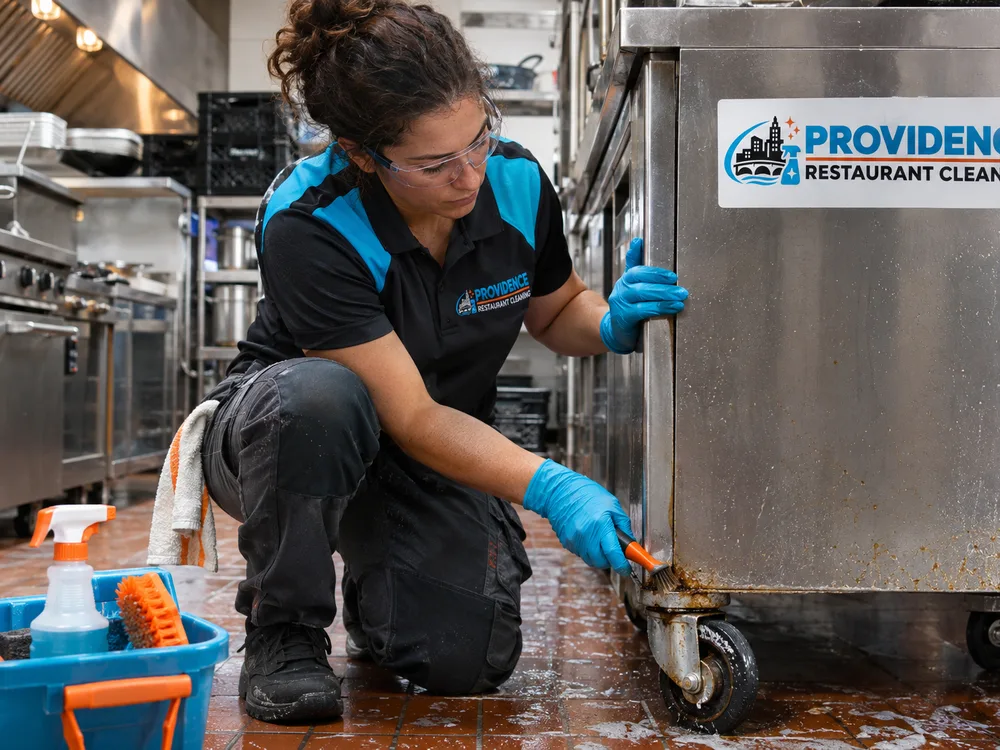
Deep cleaning can address prep areas, dishwashing zones, storage rooms, washable walls, equipment exteriors and accessible spaces around movable units. The scope records what will be moved and what must remain in place.
Walk-in cooler cleaning may include empty shelving, walls, floors, door gaskets and accessible evaporator housing exteriors. Food must be protected or relocated, and temperature-sensitive inventory requires a plan before cleaning starts.
High dusting in Providence restaurants removes buildup from accessible pipes, ledges, vents, light housings and structural surfaces. The work is scheduled when exposed food and clean utensils can be covered or removed.
Restaurant detailed cleaning can cover chairs, table bases, booths, partitions, trim, interior glass and floor edges. Product selection is matched to materials such as sealed wood, metal, laminate and tile.
Soil is removed from corners, grout lines, perimeter edges and accessible drain surrounds. Grease control requires the right chemistry and recovery method so residue is not left on walking surfaces.
A focused visit can address a defined concern such as post-construction dust, buildup behind equipment or neglected storage areas. The written scope keeps the work centered on the requested areas.
We review the kitchen, walk-in units, storage and customer areas with you. We note surface types, soil conditions, water access, sensitive equipment, loading access and any spaces that remain occupied.
The proposal identifies included areas, exclusions, preparation responsibilities and expected access. It also states whether equipment can be moved safely or whether cleaning is limited to accessible surfaces.
Work can be planned around closing hours, prep schedules and deliveries. Downtown loading limits, shared buildings and restricted elevator access are discussed before the crew arrives.
Food, utensils and movable items are protected or relocated as agreed. The crew works through the planned sequence, allowing product dwell time and keeping restroom tools separate from food-service areas.
We check the listed areas with you or your designated manager. Any access limitation or maintenance concern observed during cleaning is documented so your team knows what requires follow-up.
Cold storage cannot be treated like an empty room. Walk-in cooler cleaning should account for active inventory, condensation, shelving configuration and the need to keep doors closed whenever practical. Cardboard, loose food and stored containers can obstruct floors and walls, so responsibilities for moving inventory are settled in advance. Cleaners should avoid directing water toward electrical parts or damaging door gaskets, sensors and evaporator components.
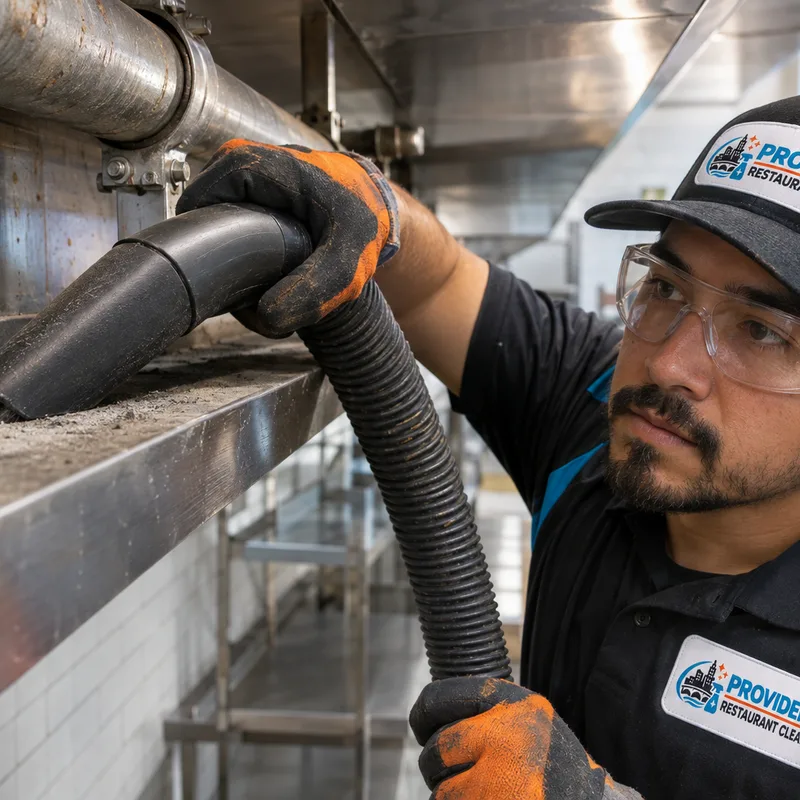
High surfaces present different risks. Dust and grease can collect on exposed pipes, beams, ledges and ventilation exteriors. Professional high dusting uses suitable extension tools, vacuums and controlled wiping methods to limit falling debris. Ladders must have stable placement, and work over food preparation zones should occur only after exposed items have been removed or protected.
Neither service replaces equipment repair, exhaust-system servicing, pest control or fire-suppression work. When a condition falls outside the cleaning scope, it should be identified rather than concealed.
A useful cleaning plan states what will happen before the crew arrives. Managers may need to cool equipment, secure knives, remove open food, clear shelving or identify items that cannot be moved. Confirming those details early reduces interruptions and gives the crew safe access to the agreed surfaces.
Providence weather also affects scheduling. Winter salt and wet grit can be tracked into entries, dining rooms and kitchen paths, while warm, humid periods may increase condensation around cold storage. These conditions change soil removal and drying needs. They do not change the core method: use products appropriate for each surface, keep tools separated by area and verify that food-contact surfaces are ready for use.
Providence Restaurant Cleaning can provide one-time restaurant deep cleaning services or discuss a recurring schedule based on kitchen volume, hours and the rate at which buildup returns. Each visit should have a defined scope. Routine janitorial tasks, hood and duct cleaning, equipment repair and specialized fire-system service are distinct needs and should be assigned to the proper provider.
Arrange a walkthrough to identify priority areas, access requirements and a cleaning window that fits your restaurant’s operating schedule.
Call for a Free QuotePricing is based on labor, soil level, square footage, access and the number of areas included. A compact Federal Hill kitchen with heavy grease behind tightly placed equipment may require more detailed labor than a larger open space with light buildup. Walk-in inventory, overnight scheduling, high-access work and equipment movement also affect the quote. A walkthrough is the best way to establish an accurate written scope.
The duration depends on the facility and scope, but a focused area may take one work period while a full kitchen and dining-area project may need a longer cleaning window or phased visits. Equipment access, grease accumulation, high dusting and cooler contents can extend the schedule. Timing is confirmed after the walkthrough and coordinated with prep, service and deliveries.
Yes, cleaning can be planned outside service hours when scheduling and building access allow. After-hours work is often practical for Downtown restaurants because it keeps guests and active food preparation away from the work area. The manager still needs to confirm entry, alarms, loading access, food protection and who will review the completed scope.
Your preparation duties are set during the walkthrough and may include removing exposed food, clearing designated shelves, securing sharp tools and identifying equipment that cannot be moved. Staff should also disclose damaged outlets, active leaks, loose tiles or other hazards. Clear preparation gives cleaners access without making assumptions about inventory or equipment.
Food must be protected and may need to be relocated depending on the surfaces being cleaned. Empty shelves and walls are easier to clean thoroughly, but the plan must account for inventory temperature and safe storage. The quote should identify who moves products, which shelves are included and whether the unit remains operational during the work.
High dusting is safest when food, utensils and clean equipment beneath the work zone are removed or fully protected. Controlled vacuuming and wiping help limit airborne debris, while stable access equipment is needed for overhead pipes and ledges. The area must be cleaned in the correct sequence so dislodged dust is removed from lower surfaces afterward.
Those specialized systems should be confirmed separately and are not assumed to be part of a general deep-cleaning scope. Hood interiors, ducts, fans and fire-suppression components may require qualified specialty providers and documented service. General cleaning may address accessible exterior surfaces only when they are specifically listed and safe to clean.
Plan the work clearly
Tell us which areas need attention and when your facility is available. We will discuss access, preparation and a written scope suited to your kitchen and commercial space.