
Back-of-house degreasing
Cooking vapor settles on appliance exteriors, nearby walls, shelving, and floor edges. Degreasing methods are matched to the finish, soil level, and manufacturer guidance.
Serving Providence, Rhode Island & surrounding areas
Detailed care for hard-working food-service spaces. Kitchen, equipment, dining-area, and support-space cleaning is planned around your operating hours.
Built around working restaurants
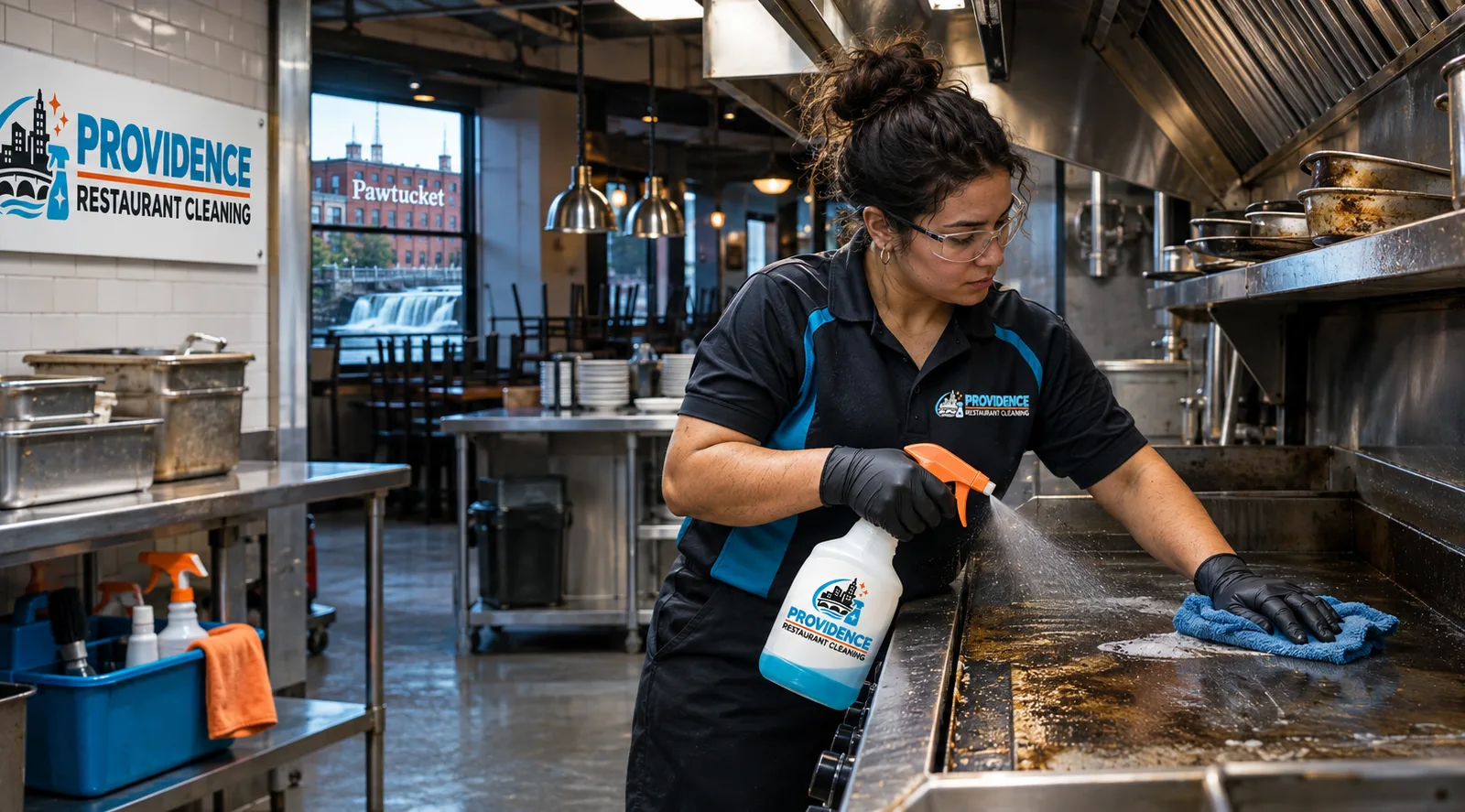
Restaurant Cleaning Pawtucket businesses can rely on starts with a written scope, a realistic schedule, and clear attention to food-contact and non-food-contact surfaces. Providence Restaurant Cleaning works with restaurant operators to identify high-use areas, grease-prone equipment, floors, restrooms, dining spaces, and overlooked edges that routine shift cleaning may not fully address.
Our team approaches the work as a restaurant company Providence homeowners rely on, bringing the same care for occupied properties to commercial food-service spaces in nearby Pawtucket. The plan is based on how your restaurant operates, not a generic checklist. That may mean overnight service after closing, focused work between busy periods, or periodic deep cleaning coordinated around prep and deliveries.
Pawtucket's restaurant mix includes compact storefronts near downtown and larger commercial spaces around major travel routes. Tight kitchens, limited storage, and shared loading access can affect equipment movement, drying time, and where cleaning tools may be staged. We account for those conditions before work begins so staff can return to an orderly workspace.
A complete scope may include dining-room tables and chairs, host areas, counters, floors, baseboards, restroom fixtures, doors, glass, and back-of-house work zones. In the kitchen, attention commonly turns to stainless-steel surfaces, prep tables, sinks, shelving, wall splash areas, floor edges, and the accessible exterior surfaces of appliances.
Food-contact surfaces require methods and products appropriate to the surface and the restaurant's sanitation procedures. Cleaning removes food residue, grease, and soil. Sanitizing is a separate step performed on a previously cleaned surface using an approved product at its labeled concentration and contact time. Mixing chemicals or skipping dwell time can make a sanitation process ineffective or unsafe.
We confirm whether staff will remove food, utensils, smallwares, and movable countertop equipment before service. We also identify exclusions such as internal electrical components, live gas connections, inaccessible ductwork, and equipment that requires a licensed specialist or manufacturer-approved procedure.
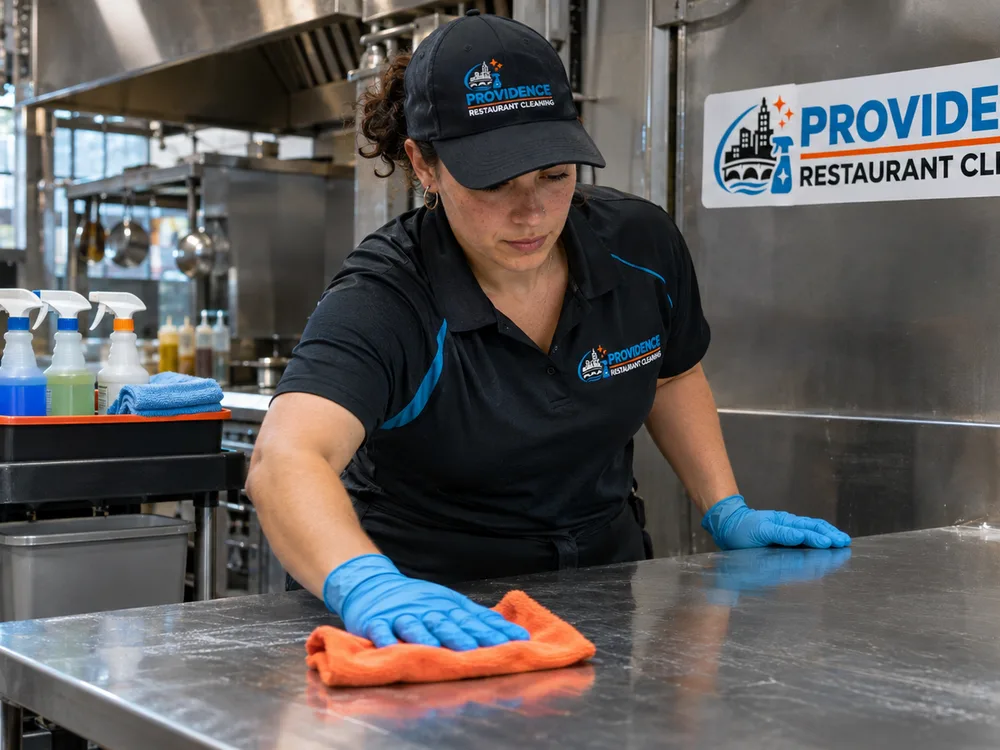
Cooking vapor settles on appliance exteriors, nearby walls, shelving, and floor edges. Degreasing methods are matched to the finish, soil level, and manufacturer guidance.
Tables, seating, ledges, doors, glass, and hard floors receive attention without leaving strong residues or disrupting the room's setup.
Restaurant floors collect tracked soil, food debris, and grease film. The method may include sweeping or vacuuming, wet cleaning, edge work, and enough drying time before foot traffic resumes.
Fixtures, partitions, dispensers, handles, switches, and other frequently touched surfaces are cleaned according to the agreed checklist.
Periodic visits address buildup behind movable equipment, under shelving, around casters, and along baseboards where daily closing routines may have limited reach.
A focused reset can prepare a restaurant after construction, equipment changes, management turnover, or an extended closure, provided trade debris and hazardous materials are handled separately.
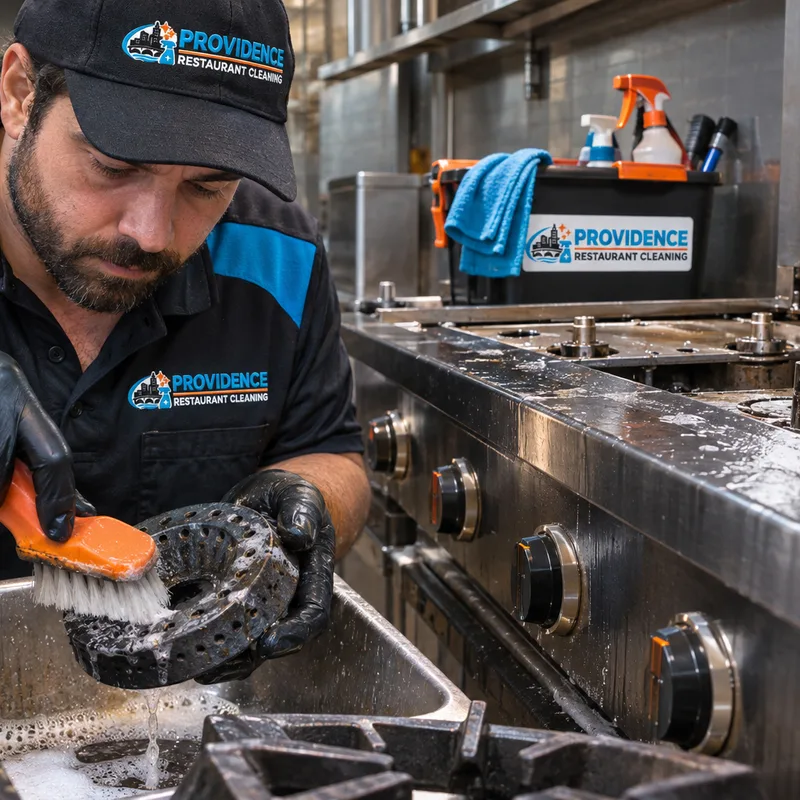
Restaurant Equipment Cleaning Pawtucket operators request often focuses on accessible surfaces where grease, carbon residue, crumbs, and spills accumulate. Typical items include ranges, fryers, griddles, ovens, refrigerators, prep coolers, stainless-steel tables, rolling racks, and the areas around or beneath movable units. Each item is assessed before cleaning because painted panels, stainless steel, aluminum, glass, rubber gaskets, and electrical controls cannot all be treated the same way.
Equipment should be shut down, cooled, and made safe before cleaning begins. Removable racks, trays, guards, and filters may require separate soaking or hand cleaning when permitted by the manufacturer. Control panels and electrical openings are treated with limited moisture. Abrasive tools are avoided on finishes that can scratch, and chemical residue is removed according to product directions.
Commercial hood interiors, exhaust ducts, fans, fire-suppression components, refrigeration repair, and gas disconnection are specialized work. We identify those boundaries during scoping rather than treating every visible component as general cleaning. This protects the equipment and gives the operator a clear account of what the scheduled service includes.
We review the kitchen, dining room, restrooms, storage areas, access points, and any equipment included in the request. The walkthrough also identifies sensitive finishes and areas that must remain untouched.
The written scope lists tasks, service frequency, preparation responsibilities, exclusions, and the preferred working window. Recurring work can be arranged around closing routines, prep periods, and delivery access.
Restaurant staff secure food, utensils, paper goods, and personal items as agreed. Equipment is cooled and shut down when required, while cleaners post wet-floor warnings and organize tools to limit cross-contact.
Work generally progresses from higher surfaces to lower surfaces and from lower-soil zones toward heavier-soil areas. Separate cloths, tools, and solutions can be assigned by area to reduce cross-contamination.
The final review checks the agreed tasks, identifies maintenance concerns visible during cleaning, and records any item that could not be safely accessed. Recurring plans can then be adjusted as operating needs change.
Scheduling matters as much as cleaning technique. Restaurants near Downtown Pawtucket may have compact storefronts, shared parking, or limited rear access, so arrival times and equipment staging need advance coordination. Businesses near the Main Street and Exchange Street commercial areas may also need work planned around pedestrian activity, customer traffic, and neighboring tenants. In larger spaces near the city's highway corridors, the scope may involve longer travel paths between kitchens, dining rooms, storage areas, and waste exits.
Rhode Island winters add tracked salt, grit, and moisture to entries and dining-room floors. Wet soil should be removed before it spreads, while salt film may require repeated passes with a compatible floor cleaner. Warm, humid periods can also slow drying in kitchens with limited airflow. Adequate ventilation and realistic cure or dwell times matter when floors must be ready before staff return.
Cleaning supports a restaurant's sanitation program, but it does not replace management controls, pest service, equipment maintenance, hood-system service, or regulatory inspections. Pawtucket restaurants operate under Rhode Island food-safety requirements, and the person in charge remains responsible for the establishment's procedures. Our job is to carry out the agreed cleaning scope carefully and document issues that require the operator's attention.
A walkthrough can turn an unclear cleaning request into a written list of tasks, preparation needs, exclusions, and a schedule that fits your hours.
Call for a Free QuoteRestaurant cleaning is usually priced after a walkthrough because kitchen size, grease buildup, equipment count, service frequency, and access can change the labor considerably. A dining-area maintenance visit has a different scope than a first-time kitchen deep clean. Overnight timing, movable equipment, floor condition, and required drying time also affect the quote. Providence Restaurant Cleaning confirms the price and task list after reviewing the Pawtucket property.
Yes, after-hours cleaning can be planned when building access, alarm procedures, staff responsibilities, and lockup arrangements are confirmed in advance. The schedule must leave enough time for chemical contact, rinsing where required, and floor drying before prep staff arrive. Downtown Pawtucket locations with shared entrances or neighboring tenants may require additional access coordination.
The duration depends on the number of rooms and equipment items, the buildup present, and whether the crew has clear access at arrival. A focused dining-room or floor service may fit within one work period, while a heavily soiled kitchen can require a longer visit or phased work. The expected work window is set after an on-site review.
Yes, exposed food, utensils, smallwares, paper goods, and portable items should be removed or securely protected according to the preparation plan. Staff may also need to empty accessible shelves or cool and shut down specific appliances. These steps give the crew safe access and reduce the risk of chemical contact with food-service items.
General equipment cleaning does not automatically include commercial exhaust ducts, fans, fire-suppression components, or every part of a hood system. Those components can require specialized tools, access, documentation, or qualified contractors. Accessible appliance exteriors, removable components, and nearby surfaces can be included when the exact items and safe methods are listed in the scope.
Yes, recurring service can be based on the restaurant's operating schedule and soil load. High-traffic floors and restrooms may need more frequent attention than behind-equipment areas or periodic detail work. The interval can be adjusted for seasonal entry soil, menu changes, operating hours, or increased customer volume.
No cleaning company can guarantee an inspection result because compliance includes food handling, temperatures, employee practices, facility condition, pest control, and management records in addition to cleanliness. Professional cleaning can address the tasks listed in the service scope and report visible concerns. The restaurant's person in charge remains responsible for its food-safety program and regulatory compliance.
Plan the work clearly
Tell Providence Restaurant Cleaning about your Pawtucket kitchen, equipment, dining areas, and preferred service window. We will help define a practical scope before work is scheduled.