Restaurant cleaning in Warwick

Restaurant Cleaning Services Warwick

Reliable cleaning built around a clear scope of work. Commercial kitchens, dining rooms, restrooms, and floors are serviced around your operating hours.

Kitchens & dining rooms Restrooms & floor care Scheduled around operations
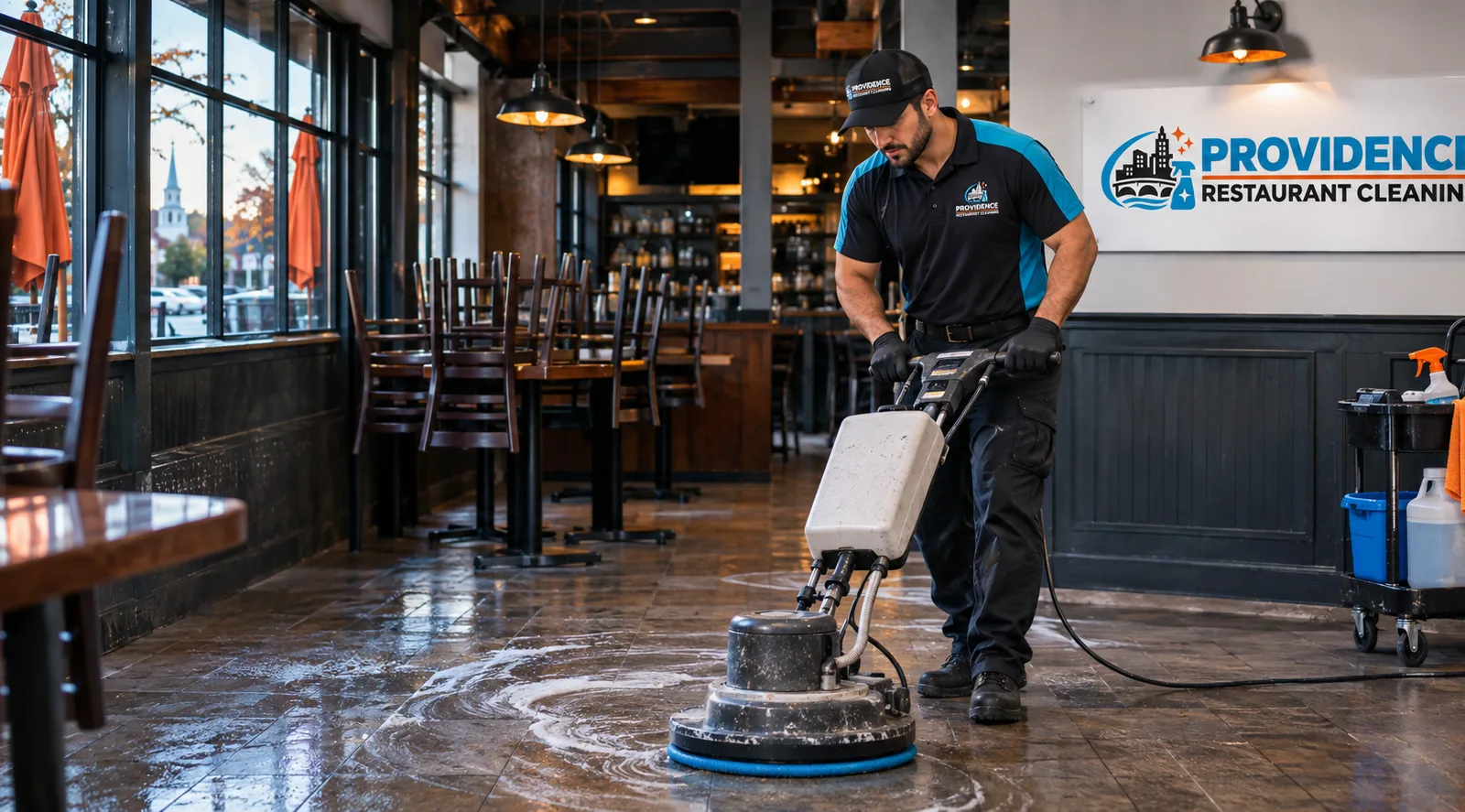
A professional cleaner using commercial equipment on the floor of a Warwick restaurant dining room after service.
Warwick Service Ready Defined Scope

Built around working restaurants

Restaurant Cleaning That Fits Your Operation

Restaurant Cleaning Services Warwick should make opening and closing easier, not add another task for management. Providence Restaurant Cleaning builds each plan around the restaurant's layout, service schedule, surface materials, and high-use areas. The scope can cover recurring dining-room care, kitchen cleaning, restroom sanitation, floor work, and detailed attention to touchpoints.

Our crews work from written task lists so managers know what is included on every visit. Working from our Point Street base, an experienced restaurant team in Providence, RI understands the practical demands of serving Warwick businesses: cleaning must be completed at a workable time, staff need dependable access arrangements, and completed work should be easy to review.

Warwick has several distinct restaurant settings. Businesses near T. F. Green International Airport may have early starts, late traffic, and little room for cleaning delays. Restaurants around Warwick Mall often need service coordinated with retail operating hours and shared access conditions. Waterfront businesses near Apponaug and Pawtuxet Village can face heavier seasonal traffic, which may increase floor soil, restroom use, and front-of-house cleaning needs. The plan should match the operation rather than force every restaurant into the same checklist.

Request a Callback
A clear, location-specific scope

What Our Restaurant Cleaning Services in Warwick Can Cover

Commercial Kitchen Cleaning

Degreasing and cleaning of accessible work surfaces, equipment exteriors, backsplashes, sinks, floor edges, and other agreed areas. Food-contact surfaces require suitable products, correct use, and a clear handoff before kitchen staff resume preparation.

Dining and Guest Areas

Cleaning for tables, chairs, booths, partitions, ledges, entry glass, host stations, and visible touchpoints. The goal is a clean, orderly room that is ready when the next shift begins.

Restaurant Floor Care

Vacuuming, sweeping, damp mopping, and machine scrubbing can be matched to tile, resilient flooring, sealed concrete, or carpet. Kitchen floors often need concentrated degreasing at traffic lanes and equipment edges.

Restrooms

Fixture cleaning, disinfection of high-touch surfaces, mirror care, floor cleaning, and supply checks can be included. Managers can set priorities based on guest volume and the frequency of service.

Detailed Periodic Cleaning

Planned detail work can address baseboards, corners, wall splash, floor buildup, chair legs, vents, and other areas that fall outside a nightly routine. These tasks can rotate through a recurring schedule.

Back-of-House Common Areas

Employee areas, corridors, dry-storage floor space, waste staging zones, and accessible non-production surfaces can be added when they are identified during the walkthrough.

Equipment, surfaces, and boundaries

Kitchen Cleaning Requires a Defined Scope

Restaurant Cleaning Warwick is more precise than ordinary office cleaning. Grease can collect at cook-line edges, under accessible equipment lips, along baseboards, and in grout joints. Loose food debris must be removed before wet cleaning, and degreasers need the correct dwell time to break down oily residue. Using too much product can leave a slippery film, while using the wrong chemistry may damage aluminum, natural stone, sealed floors, or other sensitive materials.

A walkthrough separates routine janitorial tasks from periodic deep cleaning. It also identifies equipment that staff must cool, disconnect, move, or otherwise prepare. Accessible exterior cleaning is different from dismantling appliances, servicing exhaust systems, or cleaning internal mechanical parts. Those boundaries belong in the written scope.

Food businesses are inspected by the Rhode Island Department of Health, but a cleaning company does not replace the restaurant's food-safety program. Management remains responsible for approved procedures, employee practices, pest control, equipment maintenance, and regulatory compliance. Our work supports those systems through consistent cleaning of the contracted areas.

Request a Callback
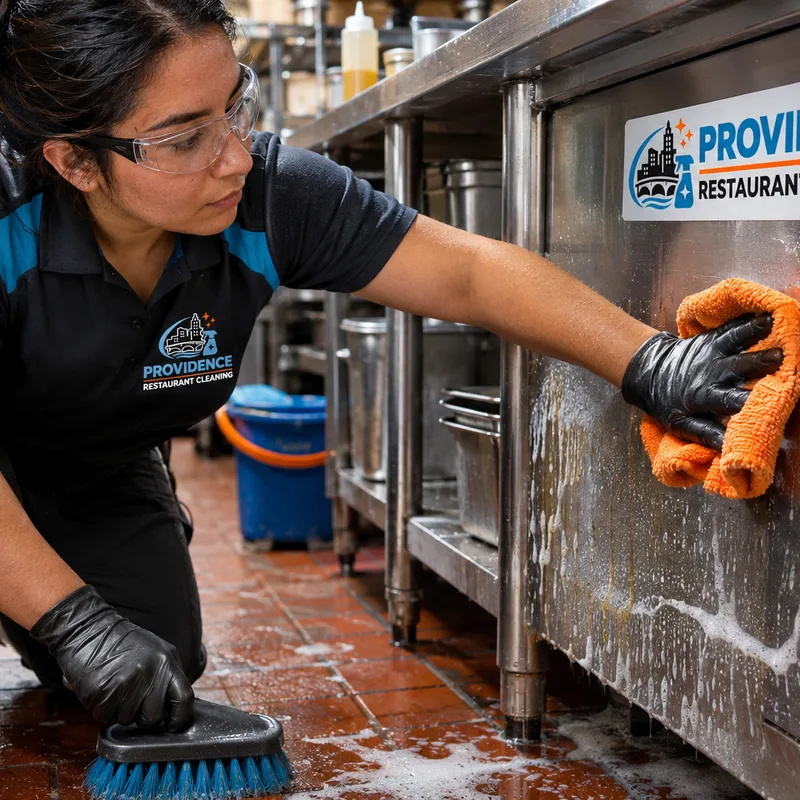
Close view of a restaurant cleaner degreasing an accessible stainless steel prep-area exterior and cleaning the adjacent quarry-tile floor.
Task-specific products and methods help remove grease without leaving residue on surrounding surfaces.
From walkthrough to review

How Restaurant Cleaning Services Warwick Are Set Up

  1. Step 01

    Walk Through the Restaurant

    We review the dining room, kitchen, restrooms, entries, storage access, floor materials, and priority problem areas. The walkthrough also covers security, parking or loading access, alarm procedures, and workable cleaning times.

  2. Step 02

    Define Tasks and Frequency

    Routine duties are separated from rotating detail work. A restaurant may need nightly floor care and restroom cleaning, while baseboards, wall splash, or deeper floor scrubbing follow a weekly or periodic schedule.

  3. Step 03

    Confirm Site Procedures

    Both sides confirm who provides access, which equipment may be touched, where supplies are stored, how waste is handled, and how completed work is checked. Product restrictions and sensitive materials are documented before service starts.

  4. Step 04

    Begin the Agreed Schedule

    The crew follows the approved checklist and timing. Any access issue, damaged surface, unusual buildup, or task outside the agreed scope is reported rather than handled without authorization.

  5. Step 05

    Review and Adjust

    Managers can review quality and update priorities when menus, hours, layouts, or traffic patterns change. Seasonal demand around Warwick's airport, retail areas, and waterfront dining can justify temporary frequency changes.

Request a Callback
Warwick operating conditions

A Practical Plan for Floors, Grease, and Coastal Weather

Rhode Island weather affects restaurant interiors throughout the year. Rain and winter slush bring abrasive grit and moisture through entrances. Near coastal parts of Warwick, wind-driven dampness and sand can add to entry soil. Absorbent matting, frequent dry-soil removal, and prompt wet cleaning help limit tracking into dining areas. Mats also need routine lifting so trapped moisture and debris do not remain against the floor.

Floor methods should follow the material and soil type. A neutral cleaner may suit routine care on many finished surfaces, while greasy kitchen tile may require an alkaline degreaser and mechanical agitation. Grout lines and textured safety flooring often hold soil that a quick mop cannot remove. Carpeted dining areas need thorough vacuuming at edges and beneath movable furnishings, with periodic extraction planned around drying time.

Waste handling also needs clear limits. The cleaning scope should state whether crews empty interior bins, move tied bags to a designated area, clean receptacle exteriors, or wash an agreed staging zone. Handling grease traps, used cooking oil systems, hazardous materials, or pest activity requires separate procedures and may call for a specialist. A useful plan says exactly where routine cleaning ends.

Request a Callback
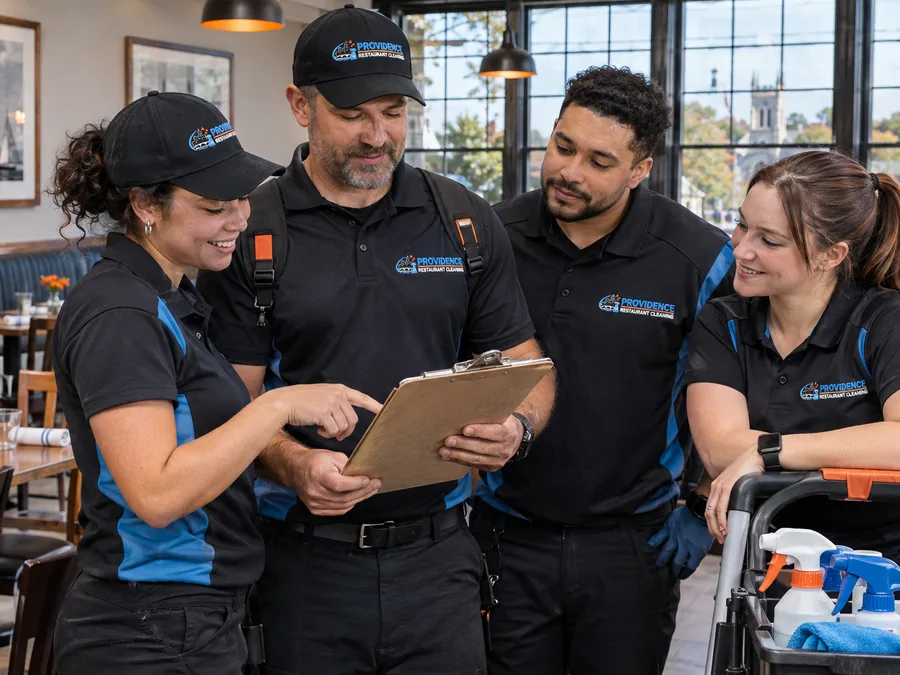
A restaurant cleaning crew reviewing a written task checklist together in a clean Warwick dining room before beginning work.
A written scope gives the crew and restaurant manager the same standard for every visit.
Clear tasks and review standards

Why Warwick Restaurants Choose a Consistent Cleaning Plan

A reliable plan gives owners and managers a repeatable standard. Crews know which areas are included, supervisors can review the same checklist, and restaurant staff know what must be completed before cleaners arrive. This is especially useful for kitchens with tight shutdown windows or businesses that cannot leave equipment and furnishings out of position for the opening crew.

Providence Restaurant Cleaning is based at 114 Point St, Suite 4 in Providence, with practical access to Warwick through the regional road network. Before work begins, we clarify timing, access, recurring tasks, periodic tasks, and exclusions. That preparation matters for airport-area restaurants with extended schedules, mall-area locations with property rules, and independent dining rooms where owners may handle access personally.

Consistency does not mean ignoring change. A dining room may need more entry-floor attention during wet weather, while a busy kitchen may need a revised rotation for corners and cook-line edges. Managers should be able to raise an issue, identify the affected task, and update the plan without rebuilding the entire arrangement.

Request a Callback

Get a cleaning plan based on your operating hours, floor materials, kitchen layout, and the areas that need attention most.

Call for a Free Quote
Scope, access, and preparation

Restaurant Cleaning Warwick FAQs

How much do restaurant cleaning services cost in Warwick?

Restaurant cleaning is usually priced after a walkthrough because labor time, frequency, kitchen grease, square footage, floor type, access, and requested detail work all affect the quote. A small dining room with light recurring duties has a different scope than a full-service restaurant requiring kitchen degreasing, machine floor care, and several weekly visits. Warwick locations with restricted loading access or narrow overnight windows may also require scheduling adjustments. The exact price should be confirmed in a written scope before service begins.

Can cleaning be scheduled after the restaurant closes?

Yes, after-hours restaurant cleaning can be arranged when access, security procedures, and the required completion time are agreed in advance. Restaurants near T. F. Green International Airport may operate very early or late, so the workable window can differ from a conventional dinner-service schedule. We confirm keys or entry instructions, alarms, locked areas, equipment shutdown responsibilities, and the required exit time before the first visit.

How often should a Warwick restaurant be professionally cleaned?

The right frequency depends on guest volume, menu, operating days, floor materials, and the work assigned to in-house staff. High-use restrooms, kitchen floors, entrances, and dining-room touchpoints may need attention each operating day. Baseboards, corners, wall splash, and deeper machine scrubbing can follow a rotating schedule. Wet winter conditions in Rhode Island may justify more frequent entry and floor care because moisture and grit are tracked indoors.

Do you clean restaurant kitchens while food is present?

Cleaning should be coordinated so food, utensils, and preparation areas are protected from chemicals, splash, and disturbed soil. Restaurant staff may need to remove or cover items and complete shutdown tasks before the crew starts. Product labels, required dwell times, and surface compatibility guide the work. The manager and cleaning team should agree on a clear release procedure before food preparation resumes.

Is exhaust hood or grease-trap cleaning included?

Specialized exhaust-system and grease-trap work should not be assumed to be part of routine restaurant cleaning. A standard scope may include accessible exterior surfaces around the cook line, but internal hood ducts, fans, fire-suppression components, and grease traps require separate methods and may need qualified specialists. During the Warwick walkthrough, these boundaries are documented so managers know which company is responsible for each task.

Can you clean around equipment without moving it?

Yes, accessible areas around equipment can be included, but the exact reach must be confirmed during the walkthrough. Cleaners should not pull out heavy, connected, hot, or unstable equipment without an approved procedure. Restaurant staff may need to cool, disconnect, or move certain units. Areas that remain inaccessible can be assigned to a planned deep-cleaning visit after safe access is arranged.

What should we prepare before the first cleaning visit?

Provide clear access instructions, identify restricted areas, remove or secure food and small wares, and explain which equipment may be touched. The crew also needs to know where waste goes, whether water and electrical outlets are available, and when the restaurant must be ready for staff. Warwick properties with shared retail access or landlord rules should provide those requirements during the initial walkthrough.

Warwick Scope Ready Restaurant Care

Plan the work clearly

Set Up Reliable Restaurant Cleaning in Warwick

Tell Providence Restaurant Cleaning about your operating schedule, problem areas, and cleaning priorities. We will help define a practical scope and a schedule that works with your restaurant.